About The Author
A Life Shaped by Faith, Family, and Resilience
She was born in a palm-leaf house with earthen floors. She raised her children under an open sky without a doctor, a hospital, or even a roof. She lost everything and rebuilt herself with the only things that never left her: faith, love, and the unshakeable will to keep going.
About The Author
Meet Luz Diaz
Luci Partela was born on July 7, 1980, in the heart of the Dominican countryside: a world of white horses, clay roads, and fields that smelt of rain and promise. She came into this world before dawn, on a Friday, in a home made of palm leaves and wooden planks, where the floor was earth, and the ceiling was faith.
As a little girl, she rose before sunrise, sack in hand, to gather grass for her goats. She rode bareback through the wind-swept fields, feeling the kind of freedom that no school could teach and no city could replicate. She didn't have much, but she had everything that mattered: the sound of the river, the warmth of her mother's hands, and a spirit that refused to be broken.
Her journey was not a gentle one. At fifteen, during a cruel December, she was struck down by a pain so deep that the world around her collapsed. She gave birth alone, without a doctor, on a dirt road in the middle of a storm, and she prayed. She bargained with heaven. And heaven answered. What happened in those hours became the center of her testimony, the beating heart of The Color of Rebirth.
Luci was not just a survivor. She was a farmer, a mother, a goat-keeper, a coconut harvester, a caregiver, a woman of the church, and a keeper of stories. She worked on cocoa farms and raised chickens. She built small businesses from nothing. She moved from one corner of the Dominican Republic to another, always with her children in tow, always with the Virgin of Altagracia in her heart.
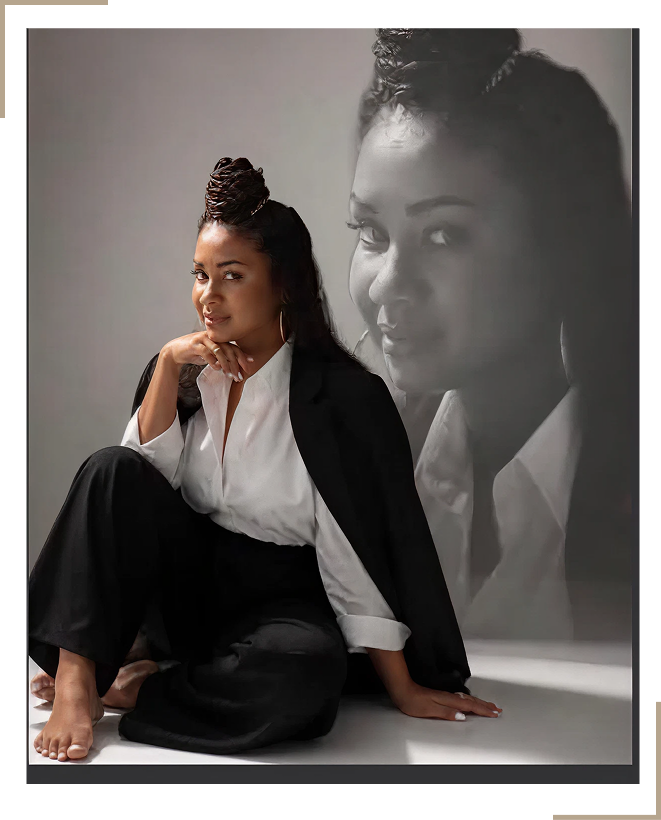
Through displacement, illness, poverty, and loneliness, she never lost the one thing that defined her: an unbroken relationship with God. Her faith was not passive. It was a daily act of courage, praying through the darkness until the light appeared.
Today, Luci Partela writes not as someone looking back on suffering, but as a woman who has found her peace. Her story is a testament to every mother who has ever given everything, every person who has ever been knocked to the ground and had to find the strength to rise, and every soul searching for proof that miracles still happen in the ordinary hours of an ordinary life.
"I fell, I rose, and I kept going. That was my journey."
"Pain does not define destiny. There is always, always, a new color waiting on the other side of rebirth.”
Luci Partela, The Color of Rebirth
What Defines Her
Three Pillars of Her Story

Unbreakable Faith
From her first prayer as a terrified teenager in labor to the daily devotions she offers to the Virgin of Altagracia, faith has never been a Sunday habit for Luci; it has been the oxygen she breathes. Even when the roof caved in and the fields flooded, she held on. Her faith is not religious performance; it is a lived, desperate, beautiful trust in something greater than circumstances.

Fierce Maternal Love
Luci gave birth to her children under conditions most people can imagine: no hospital, no doctor, no safe floor to rest on. And yet, she delivered them into the world with her own hands, cut their umbilical cords, and carried them forward. Her love for her children, Celeddy and Álvaro, was not just tender; it was a fighting, bleeding, relentless kind of love that moved mountains made of poverty and pain.
